-
0
Your Shopping Cart
0 ITEMS IN YOUR CART

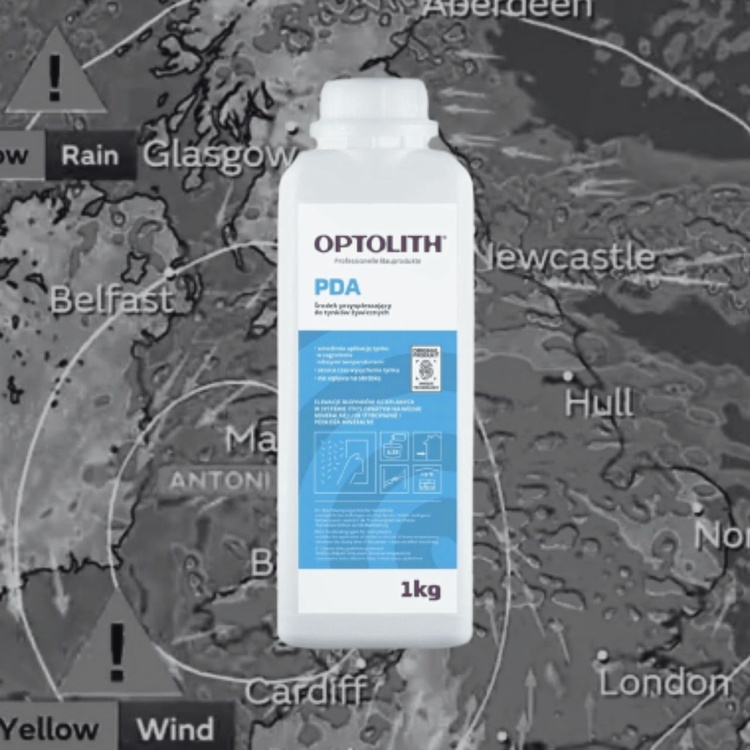
Optolith - Silicone Render Accelerator..... an honest review
"Does that accelerator you sell work?"
A question we have been asked regarding Optolith silicone render accelerator for most of Autumn and now almost daily going into Winter.
The answer, if it's used correctly, then we've found it helps.
We've used around 30 bottles of the stuff and with each 1ltr bottle splitting across 4 tubs of silicone, thats around 120 tubs in all. We've sprayed it, hand applied, added water and used neat so can safely say we've put it to the test.
It must be stressed that this product, along with any other silicone accelerator admixture is not the miracle worker some expect it to be.
Silicone render requires 3 things to dry, they are -
Humidity below 80%
Dry conditions
Temperatures above 5 degrees
HUMIDITY
Let's start with humidity. Humidity is basically moisture in the air, the higher the percentage, the more moisture in the air. Silicone render will not cure with high humidity and adding Optolith will not make the slightest difference, High humidity can last for weeks and if you have attempted to apply silicone render, then all it's going to do is sit on the wall in dormant state.
If you've applied the silicone render in a window of opportunity (when humidity drops for a short period) you may see the surface skin over and convince yourself your work has dried and all is well, this is what catches even the best renderers out. Silicone render dries front to back and can still open up weeks later. This happened to us in December 2020, a wash off 2 weeks after we applied the silicone, got paid, dropped the scaffolding and walked away only to receive the dreaded call followed by picture messages telling us it had started to wash off. This happened because the humidity levels had not dropped enough, for long enough for the render to fully cure, meaning it was still at risk from rain days and even weeks later.
TIP - Lower humidity = Quicker drying time. Propane/Diesel heaters about 2-3 meters away from the wall immediately after application along with sheets can help with curing.
WEATHER CONDITIONS
Next, dry conditions. When deciding whether to "go for it" with silicone render, most of us, (myself included) look at the weather and see if theres any rain due in the next day or 2. Most of the time this method works out ok, however, many fail to consider what the weather has been like for the last day or 2. Damp base coats and tacky primers will do nothing for curing times with the risk of the finishing coat blistering as moisture tries to escape. Garden walls (these will be covered in greater depth another time) are especially prone to holding moisture to the point many renderers don't touch them anymore, even in the summer.
Optolith will do nothing to combat wet conditions, damp base coats, tacky primers and garden walls with no DPC, a poor overhang and back filled with soil that looked dry when the silicone render was applied.
TIP - Stay well away from garden walls from November to March. Make sure the base coat and primer is 100% dry. Check for leaking gutters, poor water run off and consider boiler flu's (steam condensing above). Look for a 48 hour dry window along with low humidity.
TEMPS
Finally, Temperatures below 5 degrees. This is the time that Optolith (and other accelerators) should be used. The product used in dry conditions and low humidity in temperatures down to -5 should work as expected. Cold air holds less moisture meaning lower humidity levels, think a dry, cold and crisp sunny winters day. Applying silicone render without an accelerator on one of those cold, crisp and sunny winter days can lead to the silicone sitting dormant or even worse turning into something that resembles chewing gum on the wall.
TIP - Don't add water with these accelerators as it makes the accelerator redundant and extends the curing time. It could also potentially allow the water you've added to freeze if using in lower temperatures.
Briefly - We've tried Optolith with 250ml of water and found it cancels the effects of the accelerator out completely, this was evident on all accelerators we've used over the years, but by no means have we tried them all. Hand applying we felt the top coat application process to be no different with or without the accelerator.
Spraying, we usually spray our top coats to speed up the application time and reduce labour intensity, we did/do find the silicone top coat with Optolith added makes spraying slightly spit and fire out clumpy at times, this maybe down to material trying to set/congeal before its sprayed or our spraying equipment (Euromair DropPro8) it may be different with other spraying machines.
We do find that spraying silicone render in general, with or without an accelerator can in some instances, feel like it dries quicker, this maybe down to a thinner layer being applied (spraying) and the mixture of air and material being fired at the wall simultaneously, as opposed to a thicker trowel layer being pressed up the wall. Spraying also comes with the benefit of less wastage and the ability to patch up easier, we might look at this in more detail in the future.
To conclude - Applying silicone in winter, it's always advisable to be prepared to either tent/sheet up the property and get the heaters blowing or simply wait it out for more favourable conditions. Optolith can give you a slight advantage when used in the right conditions but should not be relied upon solely to get jobs over the line.
If used correctly, these accelerators do have a place on the market and do work well, the confusion and negativity comes from an unreasonable and unrealistic expectation for them to work in damp conditions with high levels of humidity. From October 2023 to December 2023 the average humidity levels were 90% with temperatures only averaging 3 degrees, we've had 4 named storms (Babet, Ciaran, Debi, Elin) and have seen flooding across the UK with record rainfall.
With new products entering the market every year it seems, we cannot foresee anything that would cope with the conditions over the last few months.
FAQ
WILL OPTOLITH STOP A WASH OFF?
Simple answer, no. Optolith is designed to combat cold conditions, not wet conditions.
IF I ADD MORE OPTOLITH, WILL THE SILICONE DRY QUICKER?
We would always recommend following the manufacturers guidelines, which is 250ml of Optolith per 25kg of silicone render.
DOES OPTOLITH WORK WITH EVERY BRAND OF SILICONE RENDER?
We've only tested it with MAPEI FULL SILICONE TONACHINO 1.5mm but it is claimed by the UK distributor to work in cold conditions with all brands of silicone render.
I USED OPTOLITH AND THOUGHT THE SILICONE WAS DRY, IT HAS WASHED OFF A WEEK LATER, WHY?
Optolith forms a skin on the surface of the silicone render and can give the impression it has dried, unfortunately under the surface can still be wet and it doesn't take much to bring the silicone render back to life. A constant drip on the same area, a heavy shower and even water trying to escape from behind the silicone can blow, blister and wash off what appeared to be a sound and set job.
- Tuesday, February 10, 2026
- Silicone Render
- ProTec